Tuesday, October 7, 2014

Having Spiritual Conversations


When meeting together, Christians should engage is “holy conversation,” that is, engage in fellowship and conversations that encourage and edify one’s walk with the Lord.

Malachi 3:16 (NIV) Then those who feared the LORD talked with each other, and the LORD listened and heard. A scroll of remembrance was written in his presence concerning those who feared the LORD and honored his name.  

Deuteronomy 6:6-7 (NIV) These commandments that I give you today are to be upon your hearts. Impress them on your children. Talk about them when you sit at home and when you walk along the road, when you lie down and when you get up.

Sadly, many never talk about faith and Christianity. They talk about anything but the Lord. They engage in idle, pointless talk. They say lots of words but never saying anything of true value. They often talk of nothing but the world and the things of the world. Sadly, this pointless and Spirit-less talk may even occur when we gather as a church for worship.
When Christians come together, we should inquire after one another’s souls, share our Christian experiences, and impart knowledge and encouragement to one another so that we may be edified and equipped for godliness and not be hardened by the deceitfulness of sin (Hebrews 3:12-13).
As we engage one another in spiritual conversations, we should talk about the promises of God, the preciousness of Christ, sin and how terrible it is, the beauty of holiness, the health of one’s soul, death and eternity, and the times we live in and God’s purposes in them. One of the best ways to start a spiritual conversation is by asking loving and caring questions. 
In his book, Simplify your Spiritual Life, Donald Whitney suggests ten questions to ask one another to engage in spiritual conversations. 
1)      How is your [teaching, hospitality, outreach, deacon or whatever] ministry going? What do you enjoy most about it?
2)      Where have you seen the Lord at work lately?
3)      What has the Lord been teaching you recently?
4)      Have you had any evangelistic opportunities lately?
5)      Have you had any obvious answers to prayer recently?
6)      Where in the Bible have you been reading lately? What impact has it had on you?
7)      What books have you been reading? What impression have they left on you?
8)      How can I pray for you?
9)      How have you been growing in your faith recently?

10)  What are you passionate about right now? 

Monday, September 15, 2014

Wielding the Sword of Scripture

"Take... the sword of the Spirit which is the Word of God."
Ephesians 6:17


The Christian life is a battle against the power of darkness in our lives. To help us in the fight of faith, God has given us a sword to wield. The Christian who will fight sin in his life and advance the cause of Christ through missions and evangelism must learn to take up and use this powerful weapon given to us by God. 

Here are seven ways to take up and use the Sword of Scripture in your life.

1. Read the Word of God daily.
Make it a top priority to spend at least a few minutes each day reading the Bible. A few verses is better than reading nothing. Reading a chapter is better than a few verses. Reading several chapters is better still. The point is, you must read the Bible if you are going to learn to deploy the Bible in your life.

2. Read the Bible systematically.
While there is value in making random selections for daily Bible reading, a better course of action is to have a definite plan. A number of reading plans are available, the easiest thing to do is pick a book of the Bible you are interested in and start reading it at chapter 1. Keep reading day by day, as many chapters as you'd like or have time for, until you finish the book. After you finish, pick another book and do the same thing.

3. Read the Bible observantly.
As you are reading, underline verses that are meaningful or significant to you .Circle or highlight words and phrases that jump out at you. Get a notebook and jot down notes, thoughts, questions, and reflections that come from your reading. Pay attention to what is in the text and ask questions like: Who is speaking? What is the main idea? When is this taking place? Where are these events occurring? Why does the author write this particular sentence?

4. Read the Bible meditatively.
Don't simply read the Bible and forget what you've read. Memorize a verse or two. Think about it all through the day. Reflect on what you've read. 

5. Read the Bible in community.
Get into a small group Bible study or Sunday School class and study Scripture with some friends. Meet with a friend over coffee to discuss what you've been reading and learning from Scripture. 

6. Read the Bible prayerfully.
Ask God to speak through His Word. Ask Him to give you understanding and insight into Scripture. Ask God to help you believe and obey what you've read.

7. Read the Bible obediently.
Put the Bible into practice and be a "doer of the Word" (James 1:22).

Thursday, September 11, 2014

10 Schemes of Satan to Ruin Your Life

Put on the full armor of God so that you can take your stand against the devil's schemes. 
Ephesians 6:11 (NIV)


Satan is the great enemy of humanity in general and the people of God in particular. His aim is nothing less than the ruin of humanity in an attempt to defame God. To that end, Satan has launched a number of stratagems or schemes against us to destroy us. 

Here are 10 Satanic schemes to ruin your life:

1.  Satan hides the hook of sin by camouflaging it with the bait of pleasure and happiness. In temptation, he only shows us what we want to see and conceals the pain and misery such sin would bring on our lives. Many who give abandon their families for the sake of an affair or give themselves over to addictive behavior fall prey to this scheme.

2.  Satan deceives us into thinking that a sinful act is virtuous or noble. He corrupts our thinking so that we call evil good and good evil. An example of this can be found among those who argue for euthanasia and physician assisted suicide. Advocates claim they are acting in mercy when in reality they are committing murder and justifying it.

3. Satan diminishes the seriousness of sin in our eyes. He whispers we should not be so concerned with trivial matters. He urges us to excuse our sin by telling us "everyone is doing it." Some sins we trivialize include being entertained by perversion and blasphemy in films, television programs, books and music. 

4. Satan presents God as one who never judges and calls us to account for our wrong doing. He leads us to presume upon God's mercy and excuse sinful behavior before we engage it by saying, "It's OK. Go ahead. God will forgive you." 

5. Similarly, Satan convinces us that repentance is easy and therefore we shouldn't worry about sinning. We can sin all we want today and tomorrow we can stop, say "I'm sorry" and be forgiven without any real consequence.

6. Satan points out how happy, peaceful, and prosperous some sinners seem to be. He entices us to follow their lead. When we look at Hollywood stars who seem to have all the fame, fortune, and pleasure one can find in the world, we want to be like them. How many Christian entertainers have gone to Hollywood (or Nashville) only to be seduced by materialism and worldly living? How many average Joe Christians are seduced in the same way. They will give God Sunday as long as they can have the world on Monday.  

7. The counter point to #6 is Satan's repeated reminders to Christians of the crosses, losses, sorrows, and sufferings we bear for following Christ. He slithers up next to us and says, "You know, it isn't really fair or right for you to be so faithful to a God who allows you to go through such an ordeal."

8. Satan urges us to compare ourselves with others, especially those who have terrible reputation so that we will feel self-righteous and self-justified. As long as we aren't the worst sinners we know, we will not likely feel the need to turn to the Lord in repentance or put to death our sinful desires. As long as we are convinced our sin isn't as bad as the sins of another, we will continue on in wicked living.

9. Satan shows us the world and suggests we are missing out on really living life if we remain faithful and true to Christ. "Go on," the tempter hisses, "live a little."

10. Satan suggests the Christian life is just too hard and demanding so why bother.

This only scratches the surface of Satan's schemes to ruin us. Beware of his devices to destroy you.

For further reading and study on this topic, I recommend Thomas Brooks' outstanding and highly practical book, Precious Remedies Against Satan's Devices.

Wednesday, April 16, 2014

Recommended Reading for Holy Week

In our Wednesday Worship service at Tremont Baptist, I recommended the following books:

To gain an understanding of the narrative history of Christ's crucifixion, I recommend John MacArthur's The Murder of Jesus. MacArthur masterfully details the story of Christ's final hours without theological or doctrinal reflection. To simply get the story of Jesus death, this is a great resource.

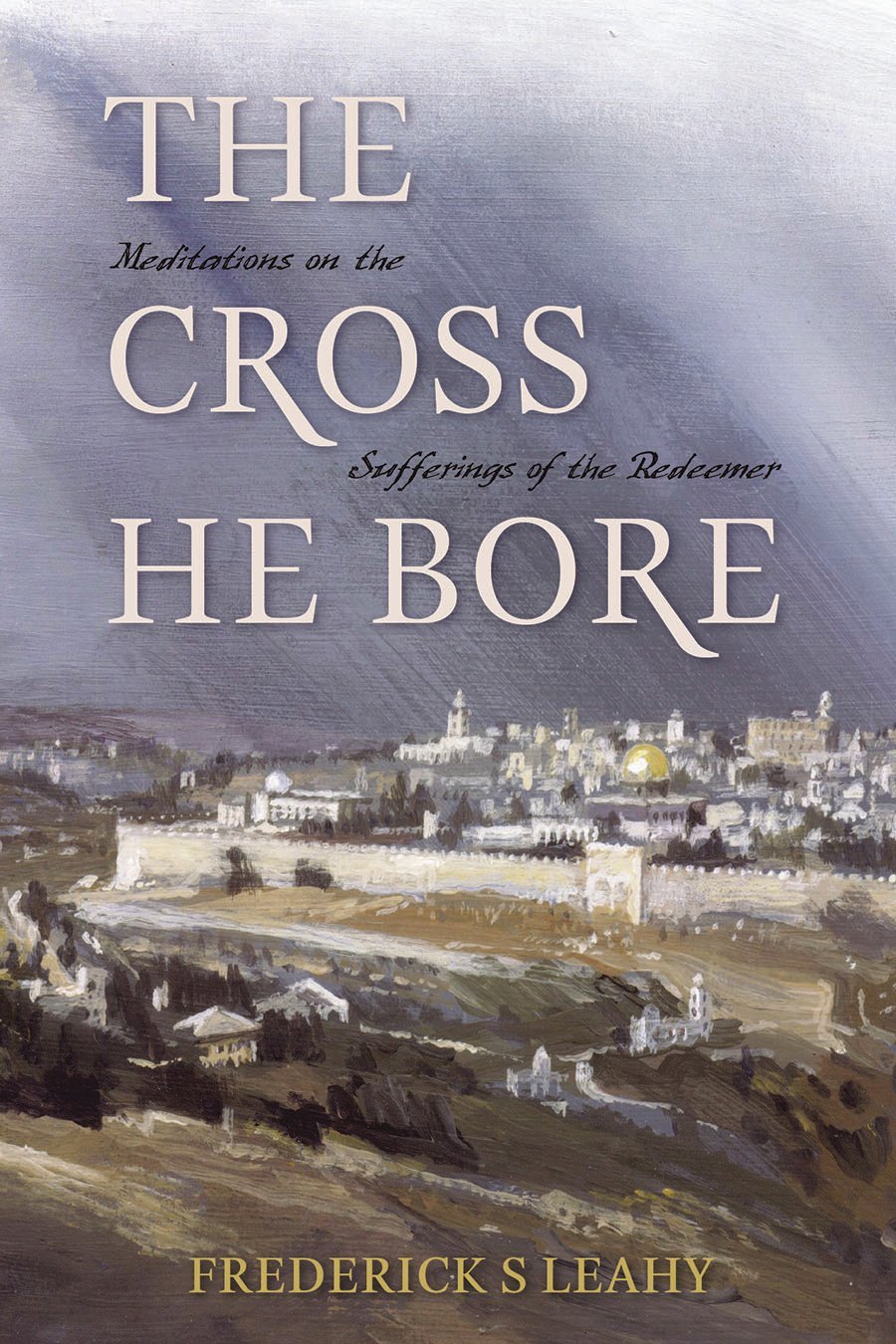
Frederick Leahy's The Cross He Bore is a small, but rich devotional highlighting several themes from Jesus' passion. I've read this little book several times and find it moving, convicting and worship-inducing each time I pick it up.

Scandalous: The Cross and Resurrection of Jesus by D.A. Carson offers some theological reflection in sermonic form about the Gospel. The first chapter in the book, "The Ironies of the Cross" is powerful.

Andreas Kostenberger and Justin Taylor have done us all a wonderful service by writing The Final Days of Jesus. They harmonize the Scriptural account of Jesus' final week and offer brief, but helpful comments throughout. The introduction to the book provides a great explanation for the perceived differences and contradictions some see in the four Gospel accounts.

Finally, another John MacArthur book. One Perfect Life is a "composite harmony" of the Gospels. Using the text of the New King James Version, MacArthur carefully blends all four accounts into one unified story. He also includes several important doctrinal passages in addition to the Gospels. This book is an outstanding resource for personal devotion, worship, and study.

Happy reading!

Wednesday, March 19, 2014

Sermon Summary: The Unhindered Gospel from Acts 28

The unbelieving world and forces of darkness oppose the preaching of the Gospel and the Kingdom of God. Despite their best efforts, God's Kingdom cannot be overthrown and God's Gospel cannot be silenced.
Though Paul was under house arrest at the end of Acts, we find that the Gospel remained unhindered in it's power.
1) The Gospel is not hindered by confusion. (Acts 28:1-10)
Some may be confused about Christianity and the message we proclaim, but their confusion does not keep us from being faithful to herald the Good News about Jesus.
2) The Gospel is not hindered by rejection. (Acts 28:11-28)
Some will accept and receive the Gospel. Others will reject it. The rejection of the Gospel by some does not negate its truth or power. We should not be intimidated or ashamed when we are rejected because of our faithfulness to the Gospel.
3) The Gospel is not hindered by oppression. (Acts 28:30-31)
Some will try to stop Christians from being Christians and from proclaiming the love of Christ and the glory of God in the Gospel. The only way we can be stopped is if we stop living for Christ and telling others.

(This sermon was preached at Tremont Baptist Church on Sunday, March 16, 2014)

Saturday, June 30, 2012

Review: The Church by Mark Dever

The Church: The Gospel Made Visible
by Mark Dever
published by B&H, 2012
softcover, 166 pages
reading level: easy
available at Amazon and WTS

This little book serves as a helpful introduction and manual on the nature, form, organization and function of the local church. Dever sets the stage for the importance of the doctrine of the church (and this book) in the preface when he writes, "The doctrine of the church is of the utmost importance. It is the most visible part of Christian theology, and it is vitally connected with every other part." (page ix) His primary goal is to see churches reflect the glory of God. He divides the book into three parts: What Does the Bible Say?, What Has the Church Believed?, and How Does it All Fit Together? Throughout his book, Dever makes the case for a Baptist church congregationally governed, led by elders, populated with regenerate members, that makes disciples for the glory of God.

I highly recommend this book.

Friday, May 4, 2012

How I Prepare to Preach Longer Passages of Scripture


Currently, I'm preaching through the Gospel of Luke chapter by chapter. It is hard work and I was surprised that preaching this way is slightly different than the way I learned to preach smaller sections of Scripture. Certainly the main principles remain, but I have to approach the text and prepare the sermon differently than if I were preaching only a paragraph or two.

In preaching preparation, it is easy to get bogged down in the details. Word studies, historical backgrounds, and theological rabbit trails can render a sermon covering 60 verses nearly unpreachable. I've had to learn to approach my preparation differently when I preach long chapters. Here is what I do:

1. I read the chapter at least 10 times. More is better. I don't pick up a pen and paper. I don't try to make notes. I don't underline or highlight verses. In this first step, I just try to immerse myself in the text and try to understand what is being said.

2. After I read the text, I start making preliminary notes. I try to summarize in one sentence what the theme of the chapter is. I try to get to the big idea the chapter holds.

3. Once I feel confident I know what the chapter is about, I start consulting outside resources to confirm my observations or help me see what I've missed. Most commentaries are too long and too involved for the kind of sermon I want to preach. I don't need to get bogged down in technical details. The best first stop resource are study Bibles. I read the ESV Study Bible notes, NIV Study Bible notes, Holman Christian Standard Study Bible notes, and the MacArthur Study Bible notes. These great resources solidify what I've already observed, fill in some holes, and point me toward areas that need further study.

4. Once I've got a good grasp on what the chapter is about and have taken note of any particular questions or issues I need to work through, I pull out the bigger commentaries. I try to read just one shorter commentary completely (like the Tyndale New Testament Commentary). Then I skim other commentaries to see what they say about particular questions that come up in my mind about key verses or themes.

5. I also do word studies on two or three key words.

6. Once I have done my study, I go back and make sure I understood the meaning of the passage, refine my one sentence summary and begin outlining the passage for preaching.

7. I flavor the sermon with appropriate illustrations and anecdotes. I continually bathe the whole process in prayer. On Sunday, I step up and preach.

And then, on Sunday night, I open my Bible once more and begin reading the next chapter and repeat the process.

Friday, January 6, 2012

My Bible Reading Plan for 2012

Daily Bible reading is an essential discipline in the Christian life. Reading the Bible is equivalent to eating food and drinking water. To help me read systematically, I use Bible reading plans.

Over the years, I've used a dozen or so different Bible reading plans. Sometimes I make it, sometimes I don't. Almost always, I fall into the trap of "I'm-reading-just-to-get-through-this" and it becomes nearly unprofitable (reading God's Word is never totally unprofitable, but it certainly doesn't take root in my life the way it should when I'm merely rushing through to make a reading goal).

This year, I'm using a different approach. My goal is to read through the Bible twice in 2012. That means reading 8 chapters a day. However, instead of being a slave to "8 chapters a day," I read as much as I can. I discipline myself to read at least 1 chapter. After that, I read as much as I can. Some days, I can read 12 chapters. Other days I get one chapter in. Most days, I'm somewhere in between (last night was 3 chapters). Whatever I do read, I refuse to feel guilty over what I don't read and rejoice in what I do read.

I am also using a new Bible, underling key or significant verses as I read. When I am done with my reading, I will journal my thoughts and reflections on the day's reading.

I started in Genesis and am currently in Exodus. But I don't feel like I must read through the Bible in canonical order. I will start at the beginning of a book and read it straight through. After being in the Old Testament for a while, I have no problem jumping to a New Testament book and reading it. Ultimately, I want to read every book of the Bible. The order I read them in is not all that important.

I hope you are reading your Bible daily and systematically. What plan are you using?

Tuesday, November 15, 2011

Win a $50 Amazon Gift Card from Frugal Dad

Hey everybody, go to Frugal Dad to enter for a chance to win a $50 amazon gift card. While you're there, check out the excellent financial advice on the site. I've been encouraged and inspired to make better financial decisions through it.

Thursday, June 2, 2011

Christianity and Liberalism: Chapter 1, Introduction


I'm following along with Tim Challies' Reading Classics Together. We are reading J. Gresham Machen's oft quoted book Christianity and Liberalism. I've been wanting to read this book for some time. Challies' read-a-long is just the excuse I needed.

Light may seem at times to be an impertinent intruder, but it is always beneficial in the end. The type of religion which rejoices in the pious sound of traditional phrases, regardless of their meanings, or shrinks from "controversial" matters, will never stand amid the shocks of life. In the sphere of religion, as in other spheres, the things about which men are agreed are apt to be the things that are least worth holding; the really important things are the things about which men will fight.
~ J. Gresham Machen, Christianity and Liberalism, pp. 1-2

While we as Christians shouldn't look to start fights, we must realize that our faith is worth fighting for. Not fighting in the take-up-our-swords-and-hack-our-enemies-to-pieces sense of fighting, but in the sense that the Christian faith (Biblical Christianity) is worth standing for, (literally) dying for, defending, and disputing over. Christians are to be marked by peace, but there can be no real peace if Christians role over and abandon the essential doctrines that make Christianity unique.

Machen's concern in his book is the compromise between Liberal Christianity and scientific naturalism. Liberal Christianity has abandoned Biblical truth in the name of peace with science. In very blunt terms, Machen says that Liberal Christianity isn't Biblical Christianity at all because it has jettisoned the essential core of Biblical Christianity in an effort to reconcile faith and science. Machen writes:
...the liberal attempt at reconciling Christianity with modern science has really relinquished everything distinctive of Christianity, so that what remains is in essentials only that some indefinite type of religious aspiration which was in the world before Christianity come upon the scene. In trying to remove from Christianity everything that could possibly be objected to in the name of science, in trying to bribe off the enemy by those concessions which the enemy most desires, the apologist has really abandoned what he started out to defend. Here as in many other departments of life it appears that the things that are sometimes thought to be hardest to defend are also the things most worth defending. ~p. 6

Biblical Christianity cannot be abandoned. We must remain faithful to the Truth of God's Word.